20ft insulated container
Check the completed internal length, width, height and door opening. Insulation, linings and installed equipment reduce the space available for pallets, shelving or work areas.
Choose the thermal specification first
Buying an insulated shipping container starts with what you need to protect. Compare a lined dry container, a non-working reefer and a unit with heating or cooling on the same specification. Insulation alone does not maintain a guaranteed temperature.
Compare your insulated-container project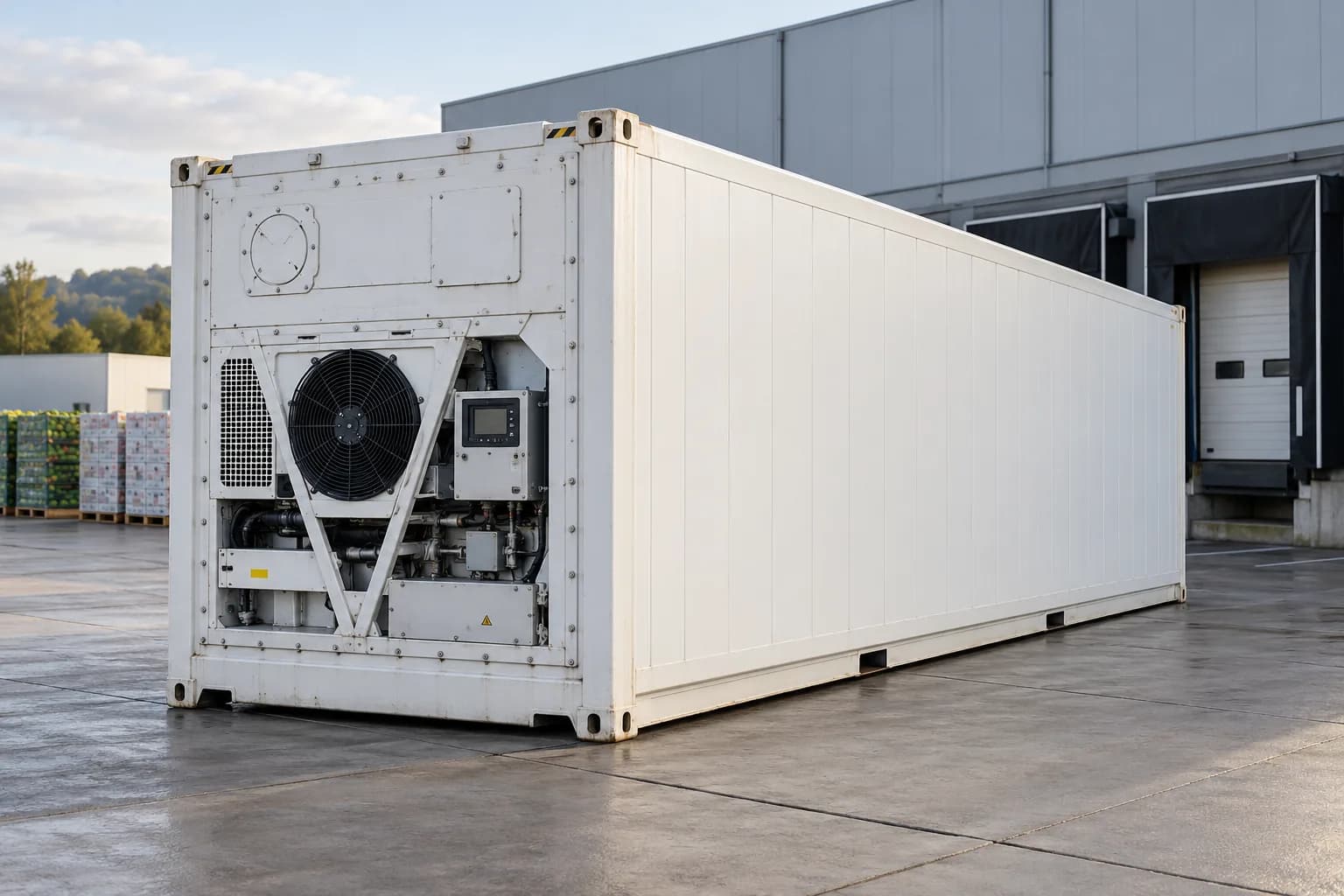
US listings use “insulated” for several construction types. A seller's label is only the starting point: request a written description of the enclosure and installed equipment.
| Option | What it means | Check in the quote |
|---|---|---|
| Insulated dry-container conversion | A dry shell with a specified insulation and lining system. | Finished internal dimensions, moisture design, door treatment, insulation coverage and included electrical work. |
| Non-working reefer | A former refrigerated container whose cooling machinery is not operational. | Condition of panels, seals and floor; machinery retained or removed; repairs and the actual clear opening. |
| Insulated container with HVAC | An insulated enclosure with specified heating or air conditioning. | Required temperature range, ambient design conditions, equipment capacity, electrical service and commissioning. |
| Operating refrigerated container | A working refrigeration system for a defined cold-storage duty. | Temperature performance, power connection, monitoring, maintenance and any required backup arrangements. |
A non-working reefer does not provide active cold storage. If the contents need a controlled temperature, give the supplier the permissible range, loading pattern, door-opening frequency and local weather conditions. Request the proposed system's performance for that duty.
Check the completed internal length, width, height and door opening. Insulation, linings and installed equipment reduce the space available for pallets, shelving or work areas.
Compare standard and High Cube shells using the proposed unit's drawings. Plan the truck approach, placement area, equipment access and door operation before choosing the longer format.
The nominal container size is not finished floor area. A converted dry container and a reefer of the same nominal length can have different internal dimensions. Use the insulation guide and usable-space tool to prepare a specification; replace planning inputs with the manufacturer's finished drawings.
Shell condition, insulation system, floor, linings, personnel doors and any structural alterations.
Heating or cooling, electrical installation, controls, ventilation and testing for the intended duty.
Delivery to the ZIP code, unloading, supports, connections, installation, applicable taxes and permit-related work.
Ask whether the price covers a completed unit or only a shell awaiting modifications. For rental, also compare the billing cycle, minimum term, servicing, extension and pickup. This guide does not publish a market average for finished insulated units: configurations and delivered totals need current, comparable quotes.
ContainerFox helps you prepare the same requirements for price comparison. Your request goes through private review; supplier participation, availability and final terms are confirmed for the project.
Ask how the assembly handles condensation, air leakage and thermal bridges at the doors, floor and steel framing. Agree which surfaces are insulated, how the lining protects the insulation, and how the unit can be inspected and maintained. Product storage, food use and an occupied office need different specifications.
For an office or home conversion, confirm the adopted code, local placement and occupancy requirements with the responsible authority. An insulation rating or refrigerated-container history does not establish approval for occupied use. A bare-shell purchase and an approved completed building are separate stages.
US buying guidance reviewed .