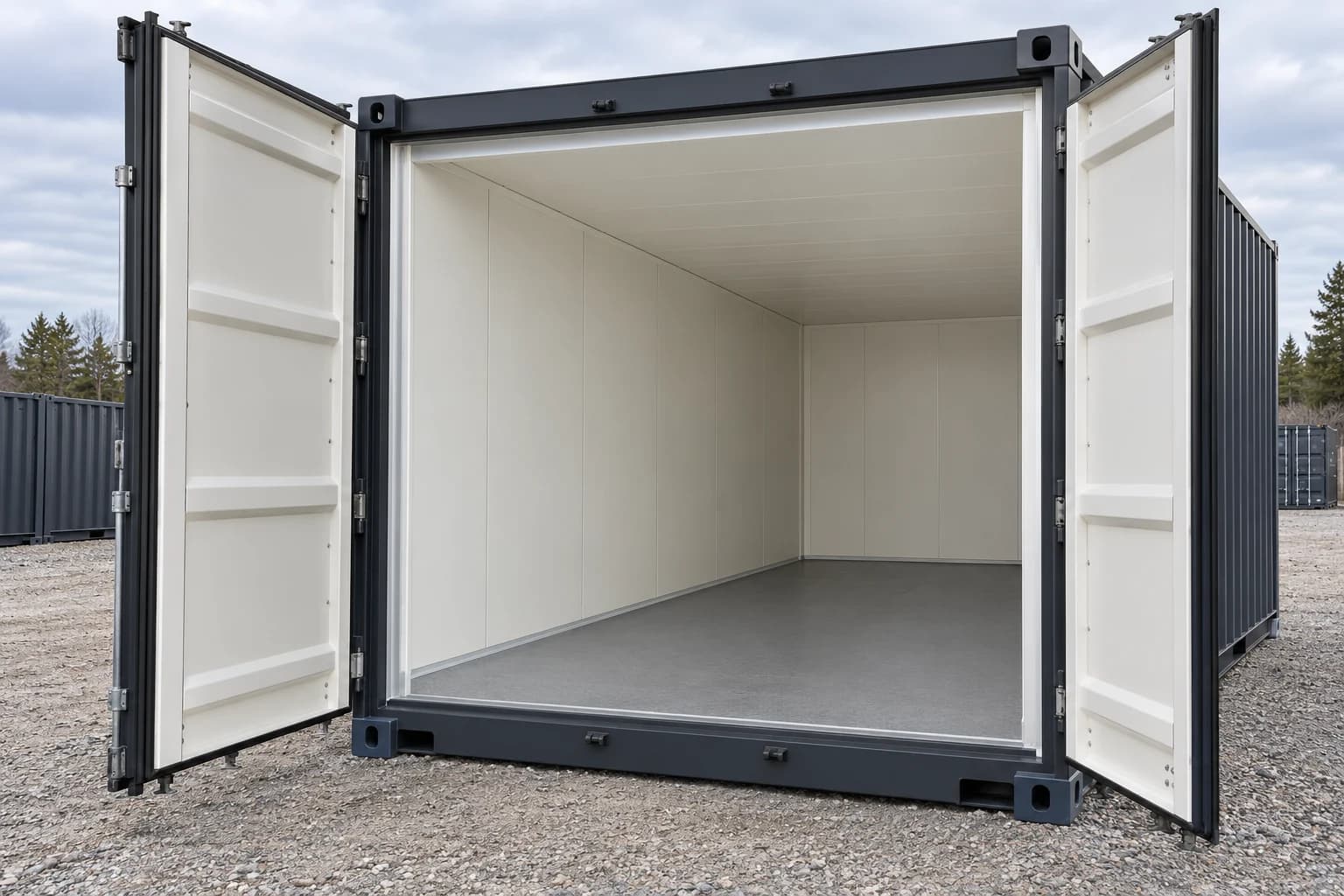
Insulated dry container
A storage container fitted with insulation and an interior finish. Check which surfaces are insulated, the material and thickness, and the remaining internal space.
Storage with insulation
Find the right insulated sea can for your storage or workspace. Compare a converted dry container, a used reefer shell and a heated unit by their actual specification.
Choose the product
The word “insulated” does not tell you whether a container can heat or cool its contents. Ask what is installed and what is working.
A storage container fitted with insulation and an interior finish. Check which surfaces are insulated, the material and thickness, and the remaining internal space.
A former refrigerated container sold for insulated storage. Its insulation remains, but the refrigeration is not operational. Check the floor, seals, lining and equipment condition.
An insulated unit with an electrical and heating package. Confirm the heater, supply requirements and suitability for your contents, location and operating conditions.
Need a specified cold temperature? Ask for an operational refrigerated unit and confirm its performance and power supply. See reefer container rental.
Choose the starting point
| Product | Consider it when | Resolve before buying |
|---|---|---|
| Dry container with a new fit-out | You need a particular internal finish, door arrangement or combination of storage and workspace. | Agree the whole insulation package, openings, finished clearances and installation work. Establish which repairs to the original shell are included. |
| Used non-operating reefer | An existing insulated enclosure suits the proposed storage and its actual dimensions work for your contents. | Inspect seals, lining and floor, confirm machinery status and any removed equipment, and check how your trolleys or shelving work with the offered floor. |
Ask for photos of the actual used unit, including door seals, floor edges and repaired areas. An insulated reefer listing can expressly exclude working refrigeration, as in ATS's used insulated-container specification. A heater or cooling system needs its own equipment specification.
Read the complete package
Ask for a section drawing showing each layer from the steel shell to the finished surface. A material name and thickness leave several important parts of the purchase undefined.
Specify the insulation, framing, interior lining and protection of exposed material. Include the junctions at corners and the steel frame.
Confirm whether the floor is insulated, its complete build-up and the finished surface. Show thresholds and any changes to clear height.
Ask how cargo doors, added personnel doors, windows and service penetrations are insulated and sealed. Check the finished clear opening separately.
Request the proposed air and vapour-control details, ventilation approach and treatment of steel thermal bridges: points where heat can bypass the insulation.
Wet contents, frequent door opening and people working inside belong in the brief. No generic lining or thickness guarantees a condensation-free enclosure. Ask the designer to assess moisture control for the intended use and climate. If an offer gives an R-value or RSI value, establish whether it describes the insulation material or the complete assembly.
Allow for the finished layers
This geometry example starts with a 20 ft standard dry-container interior from our reference fleet data. Assume a total build-up of 3.9 in on each side and each end, 4.7 in at the ceiling and 3.1 in on the floor. These assumed allowances include the whole finished layer.
| Clear dimension | Reference shell | After assumed fit-out |
|---|---|---|
| Length | 19 ft 4.3 in | 18 ft 8.4 in |
| Width | 7 ft 8.6 in | 7 ft 0.7 in |
| Height | 7 ft 10.3 in | 7 ft 2.4 in |
This is a space calculation, not a recommended insulation thickness or a temperature-performance claim. Reefer interiors and other shells have different dimensions. Check your largest item, racking and handling aisle against the finished drawing, including local obstructions. Use the insulation guide and space calculator to explore your own build-up.
Compare like for like
Finished internal length, width, height and door opening. Insulation and refrigeration equipment reduce the space inside.
Wall, roof, floor and door construction; insulation thickness and condition; ventilation and condensation-control approach.
Working or non-working refrigeration, heating, electrical supply, lining and floor condition. Request recent photos and a specification sheet.
The unit, options, delivery, offloading and applicable taxes as separate lines. Add any electrical connection or site preparation needed.
Make the request specific
Give the supplier your postal code, contents, intended temperature range and access requirements. Include whether power is available and how often the doors will open.
Describe the goods and the conditions they need. Insulation slows heat transfer; it does not maintain a set temperature by itself.
If people will work inside, include occupancy, lighting, ventilation, heating and the approvals needed for that use.
Compare fitted officesAlready own the shell? Plan a retrofit and ask how the insulation, interior lining and openings will work together.
Read the insulation guide“We need storage for boxed equipment, accessed each weekday, with shelving and a clear handling aisle. We will supply the equipment manufacturer's storage limits and item dimensions. Please propose a suitable enclosure and identify any heating, ventilation or monitoring it needs.”
State the available supply, or say it is unconfirmed. Ask for voltage, phase and rated electrical demand, the connection required, controls and installer responsibilities. For sensitive contents, agree what happens during a power outage. Include site access and your required delivery date before comparing offers.
Prepare a request for an insulated unit delivered to your site. The supplier confirms availability, equipment and the final price.
No. An insulated container has a thermal barrier. A working reefer also has a refrigeration system. A non-operating reefer may be sold as insulated storage, so confirm the machinery status before ordering.
Insulation alone cannot guarantee that. Tell the supplier your required conditions and location so they can assess the complete setup, including heat, power, door use and monitoring where needed.
Ask for a current quote for the exact size, condition, insulation and equipment. A used reefer shell and a newly insulated, heated container are different products. Compare delivered prices in CAD with taxes and installation stated.