Prepare the site · Canada guide
Shipping container permits in Canada: zoning, buildings and your site
A shipping container is not automatically exempt because it is movable, small or used temporarily. Before ordering, give the authority responsible for your site the exact location, use, dimensions and installation plan. Zoning permission and building approval answer different questions.
Reviewed
Read the plain-text guide (Markdown)
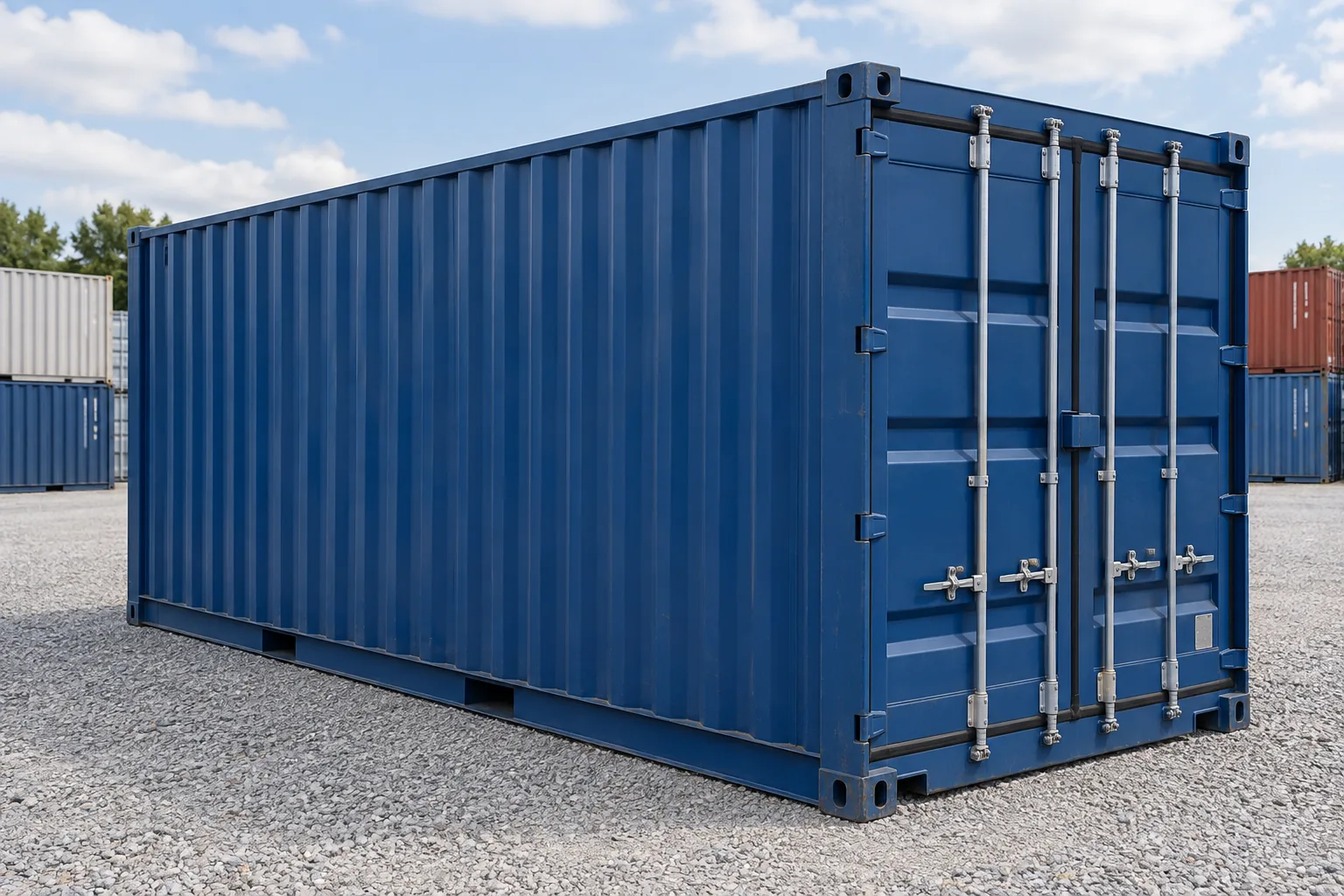
Describe the actual use
An unoccupied store, a public retail unit, a workshop and a dwelling can follow different approval routes. State who will enter, how often, what will be stored and whether anyone will work or sleep inside. Explain electricity, heating, plumbing, extra doors and any connection to another building.
Provide the proposed dates and any repeated use. Do not treat rental status or the absence of concrete foundations as permission. Get the landowner’s agreement and check existing approvals, lease conditions and property restrictions.
Your project record · no automatic assessment
Prepare your zoning and permit enquiry brief
Record the proposal and what the authority still needs. A recorded answer or document is not a permission decision, a building approval or a safety assessment.
Start with what you know; leave the rest unknown. Entries stay in this tab until you choose to copy, download or open the quote form. Refreshing clears them. Do not enter confidential or sensitive information.
Include units with your measurements: ft/in for lengths, sq ft for areas, cu ft for volumes and lb for masses. Use °C for temperatures in either mode. Your free-text notes keep the units you entered when the display preference changes.
Choose the actual site province or territory; the tool does not infer an approval route from a postal code.
For example: private storage, a workplace or an independent dwelling; include visitors or overnight use.
Existing use, position, boundaries, nearby buildings and any known designations.
Overall height including additions, footprint, number of units and how long they would stay.
Supports, access, electricity, water, drainage and changes to the land.
Checks and evidence to keep
Record who said what, the date and a document or photo reference. “Evidence noted” does not verify a claim; explain any “not applicable” choice.
6 checks unknown or unverified; 0 marked for follow-up. These counts do not score the project or decide whether to proceed.
Preview: notes carried into the quote form
Review this text before continuing. You can edit it in the form; opening the form does not submit a request.
285/1,200 characters.
View or select the complete record
The summary is added to the quote-form URL when you follow the link and may appear in browser history. Container quantity is left for you to check in that form. This tool sends no enquiry, email or supplier notification.
Check both local land-use rules and the applicable building code
Canada’s national construction codes are model codes. Provinces and territories adopt or amend them, and the applicable edition and approval process must be checked for the site. Municipal zoning or development rules can control whether a container is allowed and where it may stand.
Ask the municipality or other authority having jurisdiction which permits, drawings, professional reviews and inspections are needed. Some projects are subject to additional authorities, including where land is outside ordinary municipal jurisdiction. A supplier’s experience elsewhere does not decide your application.
| Location or issue | Starting point | Ask about |
|---|---|---|
| Ontario | Municipal building and planning services | Applicable Ontario Building Code, zoning and site-specific permits. |
| British Columbia | Local building and planning authority | Applicable BC requirements; Vancouver has its own building bylaw. |
| Alberta | Municipal planning office and safety codes authority | Land-use approval and building permit requirements for the exact installation. |
| Other provinces and territories | Local authority and provincial/territorial code administration | Applicable adopted code, climate design data and local siting rules. |
Prepare a site brief that can be assessed
Use a scaled site plan with property boundaries, existing buildings, setbacks, access, the proposed container position and its overall dimensions. Include rooftop equipment or additions in the height. Add site photographs, proposed support details, drainage and the intended delivery route.
List what is still unknown. Ask what status the authority’s reply has and whether a formal application is required. Keep written responses and approved drawings with the project record; a conversation at an enquiry desk is not an issued permit.
- Civic address, municipality, province or territory and legal site description where requested.
- Use, occupancy, duration, number of units and external dimensions.
- Setbacks, fire access, utilities, easements and neighbouring uses.
- Foundation or support proposal, alterations and professional design scope.
- Required applications, fees, inspections and any occupancy approval.
Design for the site’s climate and ground
An ISO shipping rating does not by itself establish a building’s suitability for local snow, wind, seismic loads or frost movement. Have the shell, cut openings, connections, foundations and site-specific loads assessed by a designer with the qualifications required for the project and jurisdiction. Snow drifting around taller structures and changes to drainage belong in the assessment.
Occupied units also need a coordinated plan for heat loss, air leakage, condensation, ventilation, fire safety, exits and accessibility. Specify the finished assembly rather than a single insulation thickness. Confirm electrical equipment approval and installation requirements with the local authority and a qualified contractor.
Keep delivery preparation separate from approval
A permit does not guarantee a truck or crane can reach the final position. Confirm the carrier’s turning space, lifting reach, overhead and underground services, ground bearing and exclusion area. Plan for snow clearing and seasonal road or ground restrictions where relevant.
Do not schedule delivery on the assumption that an application will be approved. Agree cancellation, storage and rescheduling terms with the supplier, and identify who is responsible for readiness before dispatch.
Questions before you choose
Is there one Canadian size below which a container needs no permit?
No national exemption is established here. The local rules, proposed use, installation and site determine the approval route. Ask the responsible authority.
Does a temporary or rented container avoid approval?
Do not assume so. Give the authority the real use, dates and siting details and ask which requirements apply.
Does a CSC plate make the container an approved building?
No. Shipping and handling information is separate from local land-use and building approval for the intended use.
Can I use the same advice in the United States?
No. This guide concerns Canada. A United States project needs a separate assessment under the applicable state and local requirements.