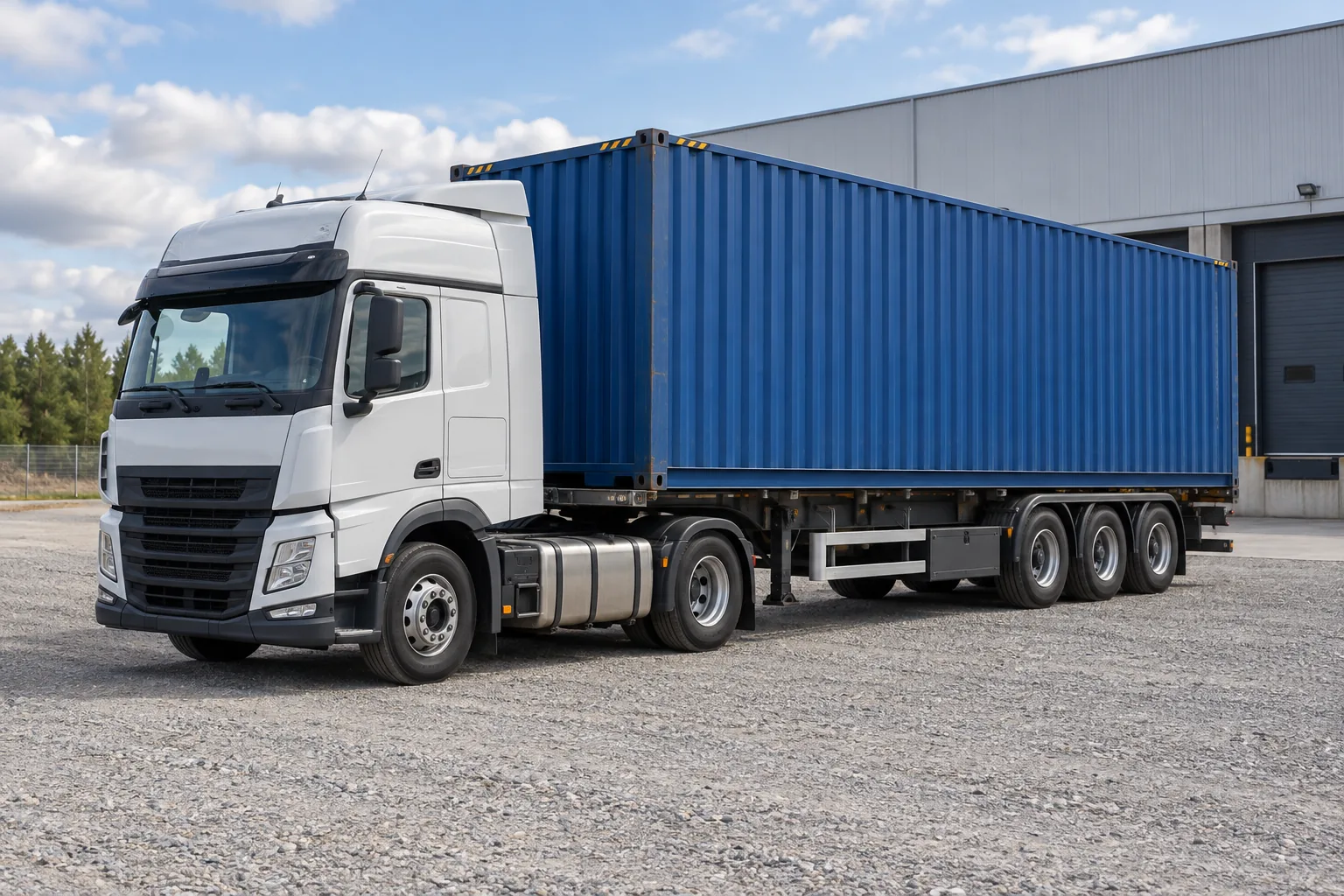
Shipping container transport cost depends on the departure depot, delivery postcode, container and unloading method. Request a quote for those details; this guide does not publish a flat Australian delivery tariff.
Ask for an itemised delivered quotation.
State the number, size and loaded or empty weight of the containers. Ask the supplier to identify transport, lifting, positioning, GST where applicable and any waiting, access or return charges separately.
The carrier must assess the complete loaded vehicle, route, mass, dimensions, bridges and unloading method. Use NHVR access and loading requirements where the Heavy Vehicle National Law applies; Western Australia and the Northern Territory operate their own transport rules. Confirm any notices, permits, escort and road-manager conditions for every route segment. Specify the appropriate container restraint system. A road permit does not approve site lifting; ask for transport and unloading charges separately.
Where the Heavy Vehicle National Law applies, agree the complying container weight declaration with the responsible entity and carrier before a consigned freight container is transported by road. NHVR guidance covers empty and loaded freight containers, and distinguishes modified units no longer suitable for multimodal transport or no longer primarily used for freight. Confirm the actual unit's classification and local requirements. A mass estimate or sea-freight VGM alone does not establish a complete road declaration.