Measure and load · Australia guide
Shipping container weight: tare, contents and loaded mass
The weight of an empty container is only the starting point. Goods, pallets, packaging, securing material and added fittings all contribute to the loaded mass. Use the markings on the actual unit, then keep the arithmetic separate from the transport and handling checks.
Reviewed
By the ContainerFox editorial team. Research, limits and corrections.
Read the plain-text guide (Markdown)
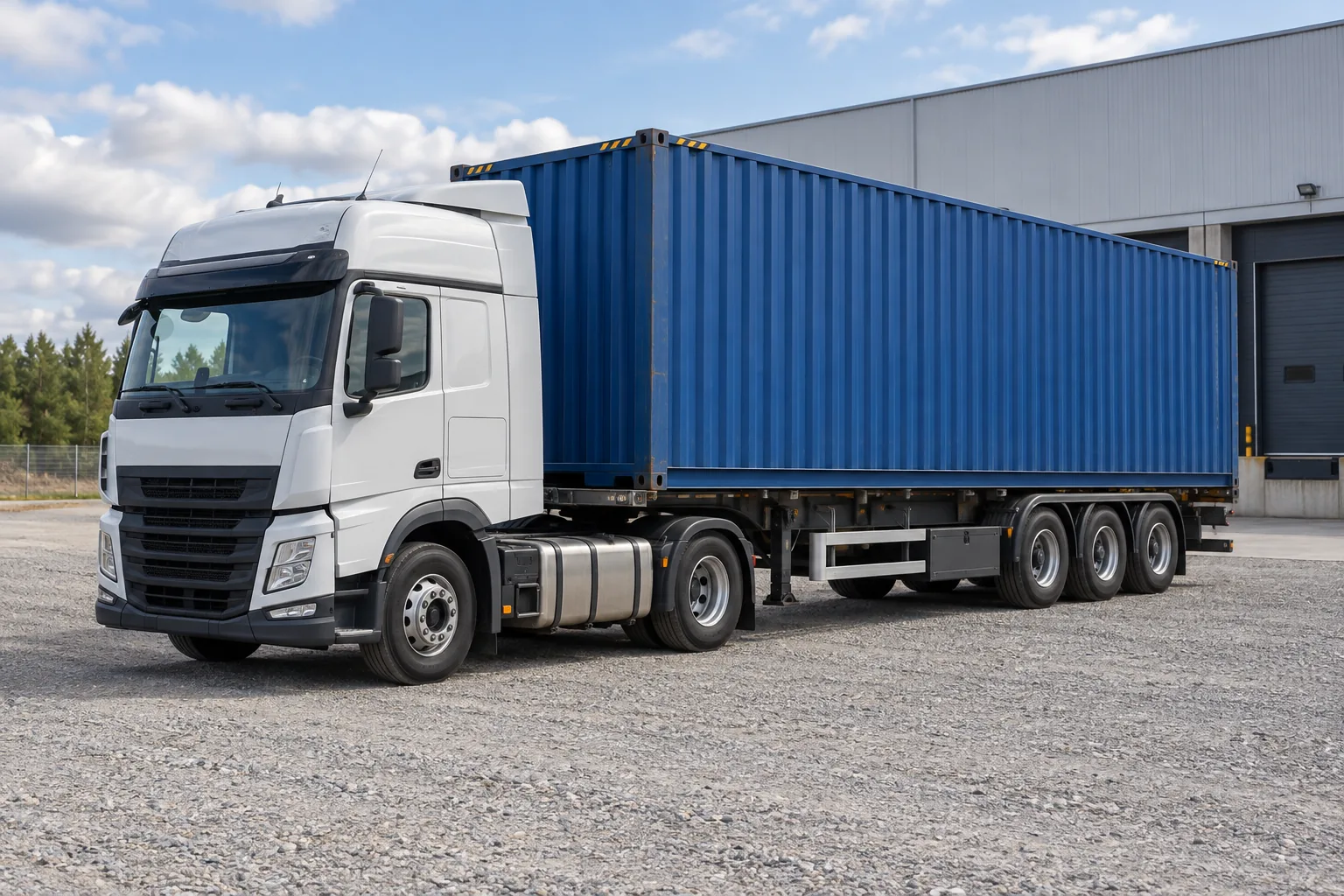
Read the three different weight figures
Tare is the empty container mass recorded for that unit. Maximum gross mass is the marked limit for container and contents together. The difference is the nominal payload allowance, but a particular load may face tighter restrictions from the floor, distribution, vehicle or lifting operation.
Fleet tables are useful for comparing formats, not identifying the unit that will arrive. Ask for a legible photograph of the actual markings and plate, the container identification, and an explanation of any modifications. If the unit has acquired a lining or fixed equipment since its tare was recorded, establish whether those additions are already included before calculating again.
| Example, not a universal specification | Tare | Maximum gross | Difference |
|---|---|---|---|
| Hapag-Lloyd 20ft · 22 G1 | 2,350 kg | 30,480 kg | 28,130 kg |
| Hapag-Lloyd 40ft · 42 G1 | 3,750 kg | 32,500 kg | 28,750 kg |
| Hapag-Lloyd 40ft high cube · 45 G1 | 3,900 kg | 32,500 kg | 28,600 kg |
Hapag-Lloyd: 20ft standard fleet example →Hapag-Lloyd: 40ft standard fleet example →Hapag-Lloyd: 40ft High Cube fleet example →
Use a decimal point and no thousands separators: enter 1234 for one thousand two hundred thirty-four. A single comma is interpreted as a decimal separator, so 1,234 means 1.234. Enter fractional inches as decimals, for example 0.125 for ⅛ in.
Calculate a loaded mass estimate
Use kilograms, with up to three decimals. The limit per field is 100,000 kg. All six values are required; enter 0 only for a known zero. Maximum gross mass must exceed tare. State whether the goods weight already includes packaging. Do not count the same pallet or fitted lining twice.
Hapag-Lloyd 22 G1 fleet example. Actual units and modifications vary; confirm the supplier’s drawing.
No unit data entered. Selecting an example does not verify your actual container.
This is arithmetic, not a loading, floor, crane, road transport or verified gross mass approval. Being below a gross limit does not establish a suitable load distribution.
Build the mass record without double counting
Decide whether your goods figure is a net product mass or an already packed mass. A delivery note for a loaded pallet may include its timber and wrapping. If that is the value you enter under goods, do not add the same pallet again under packaging. Label the basis in your project notes so the supplier can follow it.
Record how each figure was obtained: an actual weighing, a product specification, an estimate or an unknown. The calculator deliberately needs an explicit value for every category. A blank securing-material field must not silently become zero. Where the final packing materials are not selected, keep the calculation unfinished and ask who will supply their mass.
- Goods: total for all items and quantities, on a clearly stated net or packed basis.
- Pallets and packaging: anything not already counted in the goods figure.
- Dunnage and securing: timber, blocking, bracing and other added securing materials.
- Additional fittings: racking, lining or equipment not included in the current tare.
- Container: actual tare and maximum gross, with the unit identified.
A worked estimate and what it does not establish
Assume the 20ft fleet example above, 8,000 kg of goods, 300 kg of pallets and packaging, 100 kg of securing materials and 150 kg of added fittings. Added contents total 8,550 kg. With the example tare of 2,350 kg, the combined estimate is 10,900 kg. The arithmetic remainder to 30,480 kg is 19,580 kg.
Those numbers are a hypothetical exercise. The 19,580 kg remainder is not permission to add that much cargo. A heavy machine on a small support area can create a floor problem while the total mass remains below the gross limit. Its position can also matter to handling. Give the supplier the support footprint, load position and mass of the heaviest item instead of sending only the total.
Check item dimensions and the door →Record a mixed-item inventory →
Tell the transporter whether the container will be empty
A quote to deliver an empty container should not be treated as a quote to collect it later while loaded. State the expected condition at each movement and who will remove the contents. If a loaded move is proposed, the transporter needs its own assessment of the unit, lifting arrangement, vehicle, route and site.
For Australian road transport, the carrier must assess loaded vehicle and axle masses, overall dimensions, route access and any permits. The Heavy Vehicle National Law applies in participating jurisdictions; Western Australia and the Northern Territory use their own systems. Ask the carrier to confirm the route and load restraint. Container gross mass is not the vehicle payload, and dividing the weight by four does not validate supports or soil bearing.
Where the Heavy Vehicle National Law applies, arrange a complying container weight declaration with the responsible entity and carrier before road transport of a consigned freight container. NHVR guidance covers both empty and loaded freight containers; a modified unit that is no longer suitable for multimodal transport or no longer primarily used for freight can fall outside that requirement. Confirm the actual classification and local rules. Record the container and contents mass, unit identification, responsible entity's Australian address and declaration date. This estimate and its text record do not issue a complying declaration. Sea VGM is a separate requirement.
| Operation | Give the supplier | Get confirmed |
|---|---|---|
| Empty delivery | Size, tare basis and modifications | Vehicle, unloading method and access requirements |
| Loaded relocation | Packed mass, item positions and condition | Whether the move is offered and its assessed method |
| Long-term static storage | Heaviest items and support footprints | Floor suitability and site support requirements |
| Pickup after rental | Empty or loaded, return condition and access | Pickup scope, notice and charges |
NHVR: loading and load restraint →NHVR: container weight declarations and modified-unit scope →
For sea freight, an estimate is not verified gross mass
Under Australia’s Marine Order 42, verified gross mass is required for containers carried by sea, including domestic voyages and empty containers within its scope. For a completely empty container, the marked tare can provide its VGM; liquid residue or other contents prevent treating it as empty. Confirm the applicable requirements with the shipper and carrier.
For packed containers, agree the accepted weighing or approved component-summing method, signed information and deadline with the shipper, terminal and carrier. The Order has specific exceptions, including qualifying containers carried as part of a wheeled ro-ro cargo unit. This calculator does not verify scales, certify a weighing method or supply a VGM: arrange the shipping process separately.
Send a weight brief the supplier can review
Keep the calculation, unit identity and open questions together. The tool can copy or download a text record and place a short summary in an editable quote request. State explicitly if you used the fleet example rather than the unit offered for sale.
Before accepting a proposal, reconcile any different tare, goods basis or included fittings. Ask for a revised calculation when the selected container or packing list changes. Keep the measured dimensions and the mass record linked to the same version of the project.
- Identify the container and whether its figures are confirmed or provisional.
- State each load category and any mass still requiring verification.
- Describe the heaviest individual load and how it contacts the floor.
- Distinguish delivery, installation, subsequent relocation and pickup.
- Obtain separate confirmation of handling and transport arrangements.
Questions before you choose
Does a 40ft container carry twice the weight of a 20ft?
No. The formats differ substantially in floor length, but the marked mass limits do not double. Compare the actual units and the transport arrangement rather than scaling a 20ft payload.
Can I enter tonnes?
The fields use kilograms or pounds according to your Metric or Imperial selection. One tonne is 1,000 kg. Convert tonnes to the unit shown before entering the value. If a foreign document uses tons, establish its definition first: a short ton is 907.2 kg. Total mass does not establish floor pressure or a crane’s capacity at the required reach.
Why is the calculator unfinished when one field is blank?
An unknown is not a zero. Confirm whether that category is absent, included elsewhere or still to be measured, then enter an appropriate value.
Can the result approve a loaded lift?
No. It sums entered masses only. The contractor must assess the proposed operation, equipment, unit condition, load distribution and site.