Equipment
Specify the exact units, usable facilities, fittings and capacity for the proposed workforce and working hours.
Purchase · Rental · Delivered and installed cost
Modular site facility rental costs depend on the facilities, rental period and services your project needs. Ask for a quote covering delivery to your postcode, installation, servicing and collection. This guide helps you compare the full budget and assess buying as an alternative.
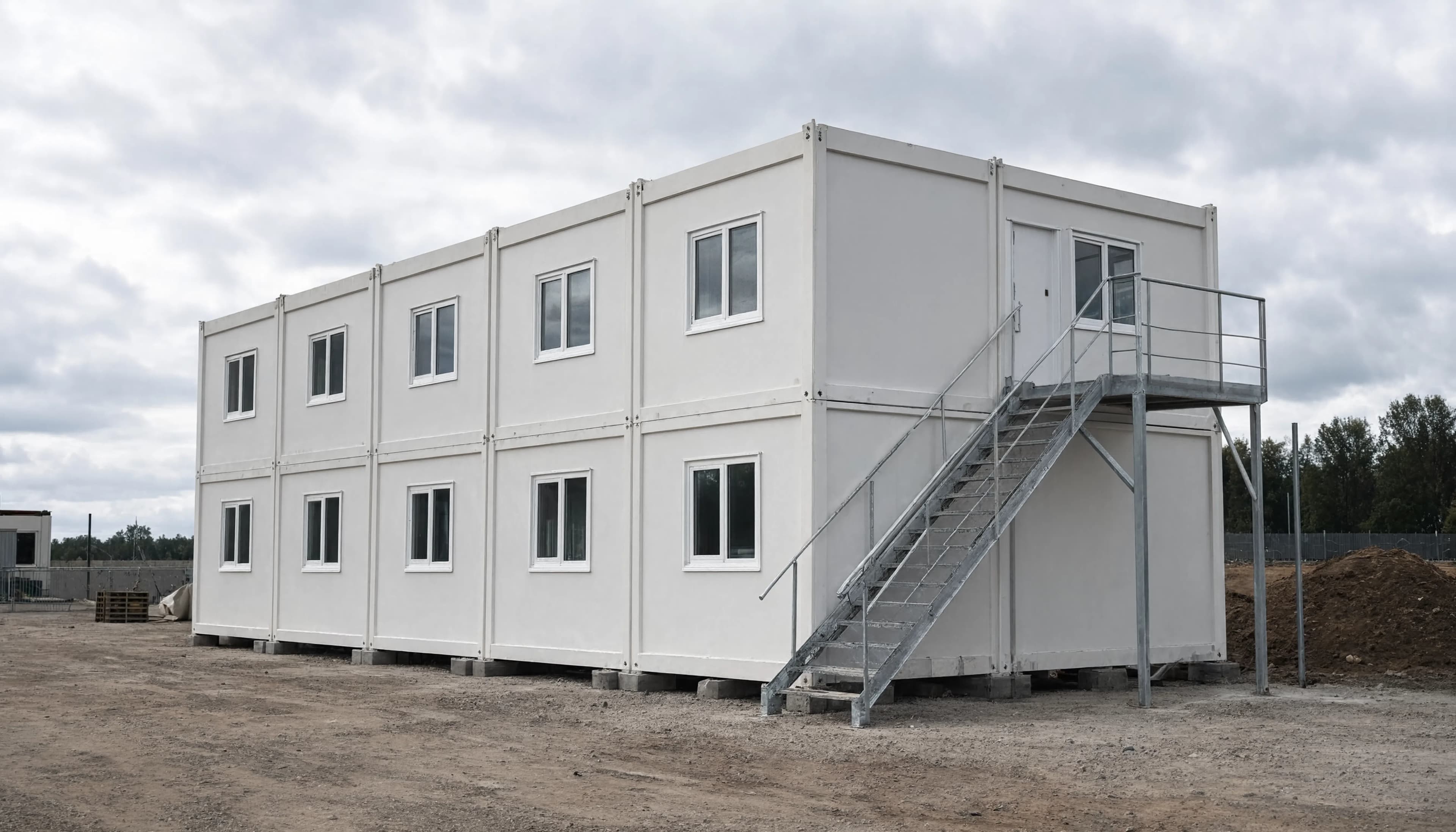
Use this quotation checklist to request a current rental rate for the actual facilities, workforce and dates. There is no published Australian rental price sample or flat delivery tariff on this page. The postcode, site access and required servicing must be included in the supplier's assessment.
Specify the exact units, usable facilities, fittings and capacity for the proposed workforce and working hours.
Include delivery, unloading, supports, assembly, water and drainage arrangements, electricity and commissioning before work starts.
Price cleaning, consumables, tank emptying and water replenishment, maintenance, emergency replacement and final collection.
Ask for the charge period, GST where applicable, minimum rental, extension and notice terms, and every delivery or collection charge. Commercial rental terms do not change the requirement to provide suitable employee facilities from the start and throughout the work.
Request an itemised quotationIdentify the state or territory WHS regulator and applicable approved facilities code. Victoria uses its OHS framework and has construction-specific guidance. Confirm suitable facilities before work starts and maintain them throughout the project.
Provide suitable washing arrangements with water, cleansing products and hygienic drying. Assess the actual work: exposure to hazardous substances or contamination may need additional washing, showers or specialist decontamination.
Specify: Describe supply, drainage, temperature, consumables and cleaning. Keep contaminated equipment and clothing away from clean facilities; agree controls for hazardous tasks with the responsible safety professional.
Assess whether the work requires changing rooms, secure personal storage, drying facilities and separation of contaminated protective clothing. Provide privacy and arrangements suitable for the workers using them.
Specify: State the work, contaminants, wet clothing and laundering or disposal responsibilities. An ordinary site cabin does not establish compliance with specialist asbestos or other hazardous-work requirements.
Plan clean eating and break facilities away from contaminants, with suitable seating, shelter and facilities for food and drink. Assess heat, cold and remote work as part of the workplace risk assessment.
Specify: Record simultaneous users, furniture, weather protection, ventilation, cleaning and any food storage or preparation needs. Maintain access while units move or are serviced.
Use the locally approved facilities and construction codes. From 1 July 2026, section 26A requires compliance with relevant approved codes or an equivalent or higher standard of health and safety.
SafeWork NSW: facilities guidanceUse the OHS Act 2004 and applicable Victorian guidance. The Facilities in construction code has exclusions for specified residential work and small, short civil works. Those exclusions do not remove the underlying duty to provide adequate facilities.
WorkSafe Victoria: facilities guidanceThe facilities Code of Practice 2021 was varied from 1 September 2026. Construction projects also have specific WHS Regulation amenities duties, including designated female toilets where required; confirm Schedule 5A and the project's workforce, cost and levels.
Workplace Health and Safety Queensland: facilities guidanceUse the WHS Act 2020 and relevant General or Mines Regulations. Shared or nearby facilities must be suitable and safely accessible when workers need them. Construction-specific guidance and wastewater approvals require separate checking.
WorkSafe WA: facilities guidanceUse the WHS Act and Regulations 2012 and locally approved facilities code. Consult workers and coordinate with other duty holders about the workforce, hazards, access, cleaning and any shared facilities.
SafeWork SA: facilities guidanceThe current facilities code took effect on 23 April 2025 under Tasmania's WHS framework. Check construction guidance as well as facilities for outdoor, remote and isolated work.
WorkSafe Tasmania: facilities guidanceThe facilities Code of Practice Approval 2025 took effect on 5 November 2025 and revoked the 2020 approval. Establish adequate and timely access under the ACT WHS framework, with construction guidance for the actual site.
WorkSafe ACT: facilities guidanceUse the WHS (National Uniform Legislation) Act and Regulations 2011. The approved facilities code was varied on 12 March 2026. Include heat, remote access, emergency arrangements and supply interruptions in the facilities plan.
NT WorkSafe: facilities guidanceModel codes apply only where adopted or approved locally; verify the applicable jurisdiction and work.
Request a total for your project, with each line item shown as included, priced separately or covered by your team.
Purchase price or rental charges for the planned period. Ask for a list of rooms, furniture, heating and sanitary equipment.
Site address, number of trips and lifting method. For rental, ask for a price for delivery and collection.
Supports, levelling, packing, joining the units and access. Make clear what your team prepares and what the supplier does.
Water, drainage and electricity: distance to connections, materials, works and commissioning. Specify any standalone needs.
Utilities, maintenance, refilling and emptying of any tanks. Ask what is included and how often.
For rental: dismantling, collection, cleaning, equipment repair and site restoration terms. For purchase: dismantling, relocation or storage if you reuse the units.
Security deposit, any insurance, deductible, rental extension, repairs and site restoration: ask for the applicable terms and amounts. A refundable deposit is cash you have to put forward; it is not automatically added to the final cost.
Have the billing start and end dates, the minimum rental period and how a part month is handled confirmed. The total rental charges depend on these terms.
Rental charges for the period + delivery and collection + installation and connections + services and end-of-rental costs.
Also ask the price for an extra month. If a monthly amount relates to finance with an option to purchase, compare the commitment period, any initial payment and the final purchase price before comparing it with standard rental.
Compare the solutions over the same period of use and with the same equipment. Purchasing may also involve costs between two sites.
Ask for a rental offer with transport, collection and detailed services. Cost an extension if the end date remains uncertain.
Cost up the rentalAdd to the purchase the transfers, storage, maintenance and adaptations. For used units, ask for details of condition, repairs and equipment actually supplied.
Cost up the purchaseNo period of use automatically makes purchase more cost-effective. Base the calculation on planned projects and comparable quotes, without assuming a guaranteed resale.
A lower total is useful if the proposed installation covers the same needs.
For each quote, check the quantities, plan, inclusions and exclusions. Keep amounts on the same tax basis: a price before GST where applicable cannot be compared directly with a tax-inclusive total.
Prepare an enquiry with your period, location and required equipment. Free and without obligation.
Prepare a site facilities rental enquiryDescribe the workforce, uses and rooms required.
ReadSpecify the rental period, facilities, servicing and collection before comparing costs.
ReadAnticipate the siting, lifting and connections.
ReadSee the guidelines on equipment and hygiene.
ReadAustralian workplace guidance reviewed on 2 October 2026. Prices depend on the quoted equipment, location, duration and services; the directory does not sell or rent these units.